

Why Resort Venues Beat City Hotels for Corporate Retreats
Convenience isn't the same as effectiveness. Here's why a growing number of companies are moving their retreats from city conference rooms to resort venues — and where the results actually show up.
When it's time to plan a corporate retreat, most companies default to the familiar choice: a conference room at a city hotel. It's convenient and easy to book — but a resort venue is increasingly the smarter call for retreats meant to actually achieve something. Here are seven reasons why.
Physical Distance Creates Mental Distance
A city hotel keeps your team surrounded by their everyday environment — same traffic, same food options, same temptation to "just pop back to the office." That proximity quietly undermines the point of a retreat.
A resort forces a clean break. Employees mentally check out of routine faster, arriving at sessions more present and engaged — physical distance from daily distractions genuinely improves focus and idea generation.
Resorts Are Built for Immersion, Hotels for Transit
City hotels are designed to get business travellers in and out efficiently — compact rooms, functional common areas, little encouragement to linger together.
Resorts do the opposite. Open lounges, pool decks, gardens, and multiple dining areas naturally spark spontaneous conversation — often where the best informal idea-sharing actually happens.
Built-In Recreation Reduces Logistics Headaches
Organising team-building at a city hotel usually means outsourcing — an external activity centre, transport, multiple vendors just to move everyone from point A to B.
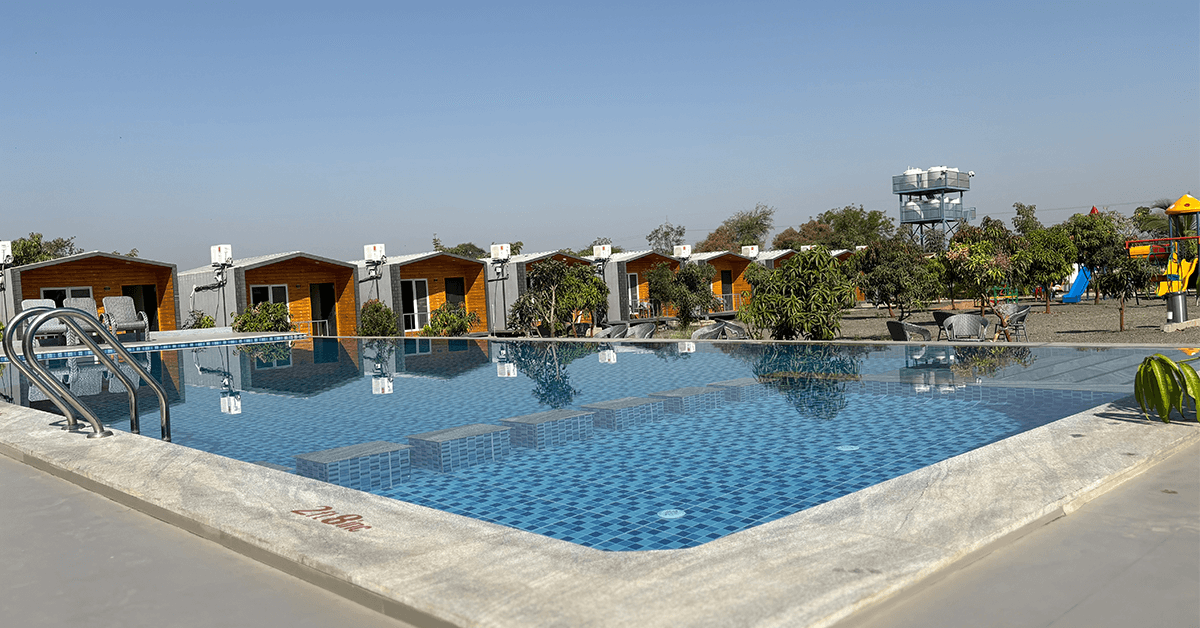
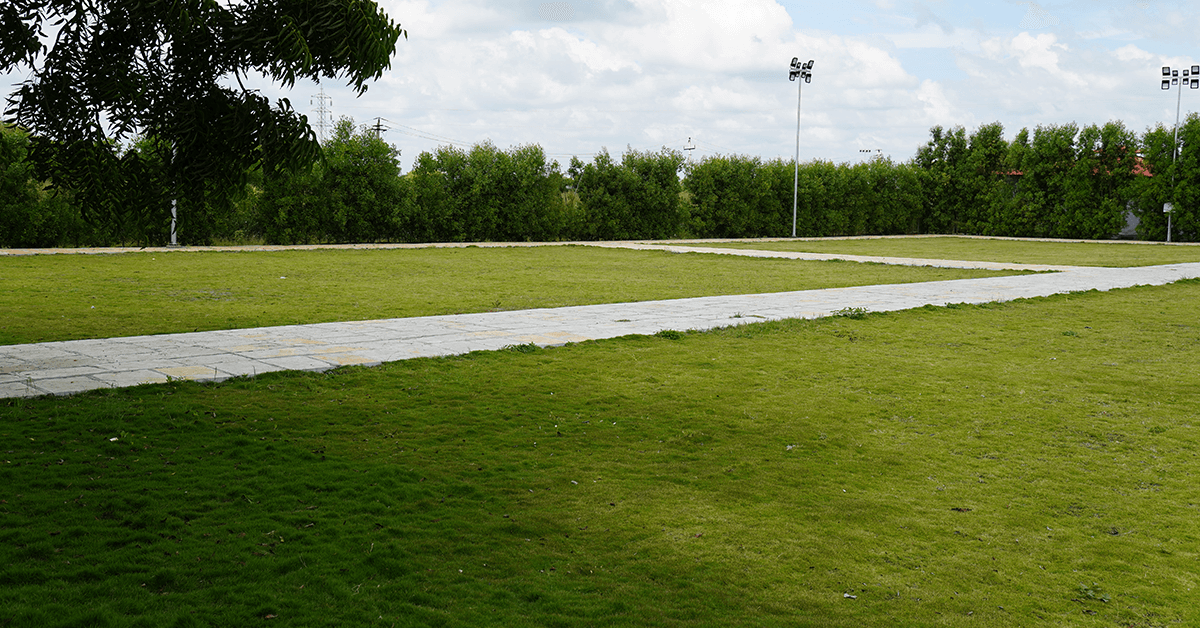
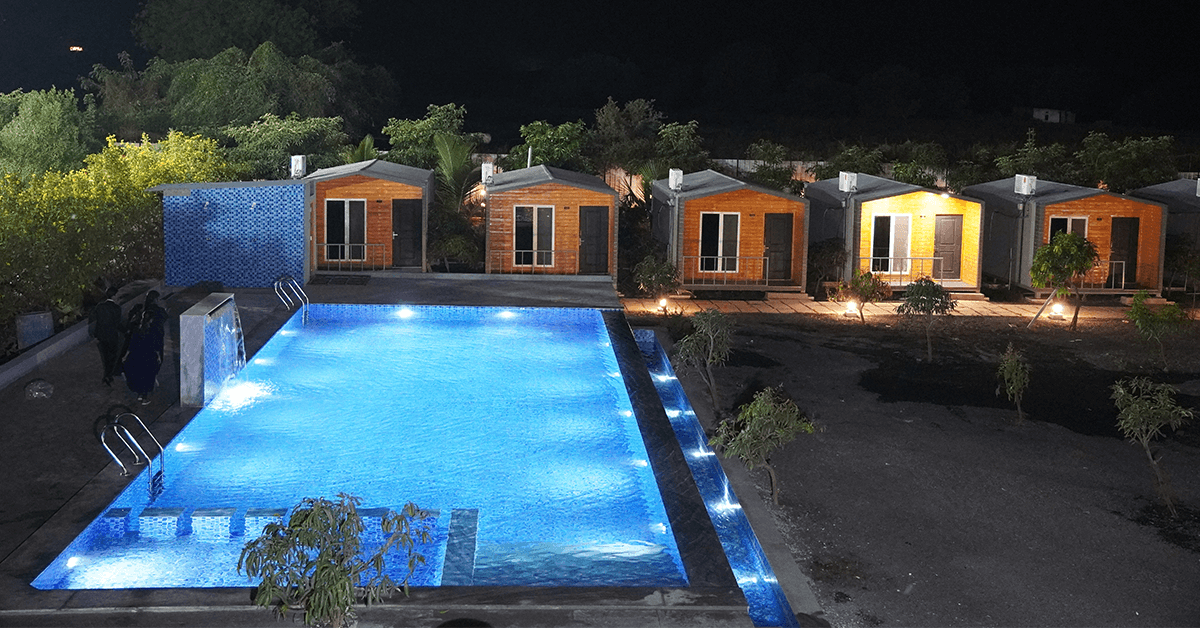
Resorts typically have recreation built in — a pool like our Infinity Swimming Pool , open lawns, and nature trails through spaces like Cherry Forest — so teams move from a strategy session to an activity without leaving the property.
Better Value at Scale
City hotels can look cheaper for a short, single-day event. But factor in accommodation, meals, meeting space, activities, and transport across a multi-day retreat, and the math often flips.
Most resorts bundle stay, meals, meeting space, and activities into one quote — simpler budgeting, and frequently cheaper per person than assembling the same experience piecemeal in a city.
Space to Actually Spread Out
City hotel conference rooms are boxed in by the building's footprint — one main hall, maybe a breakout room, and that's it.
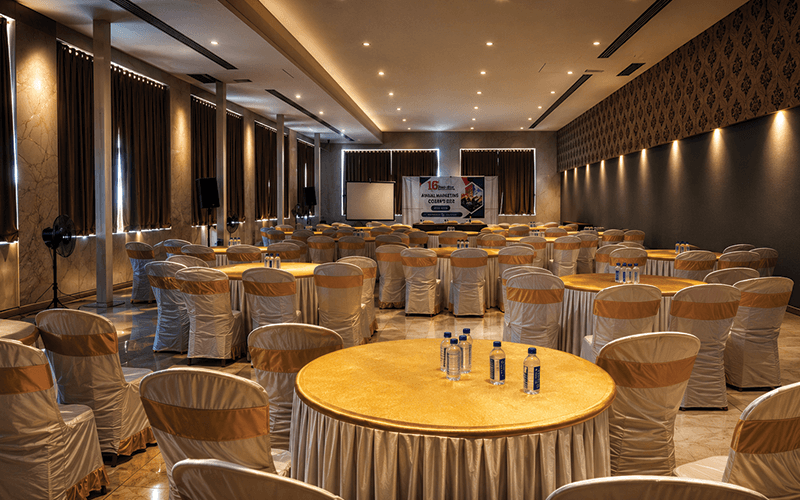
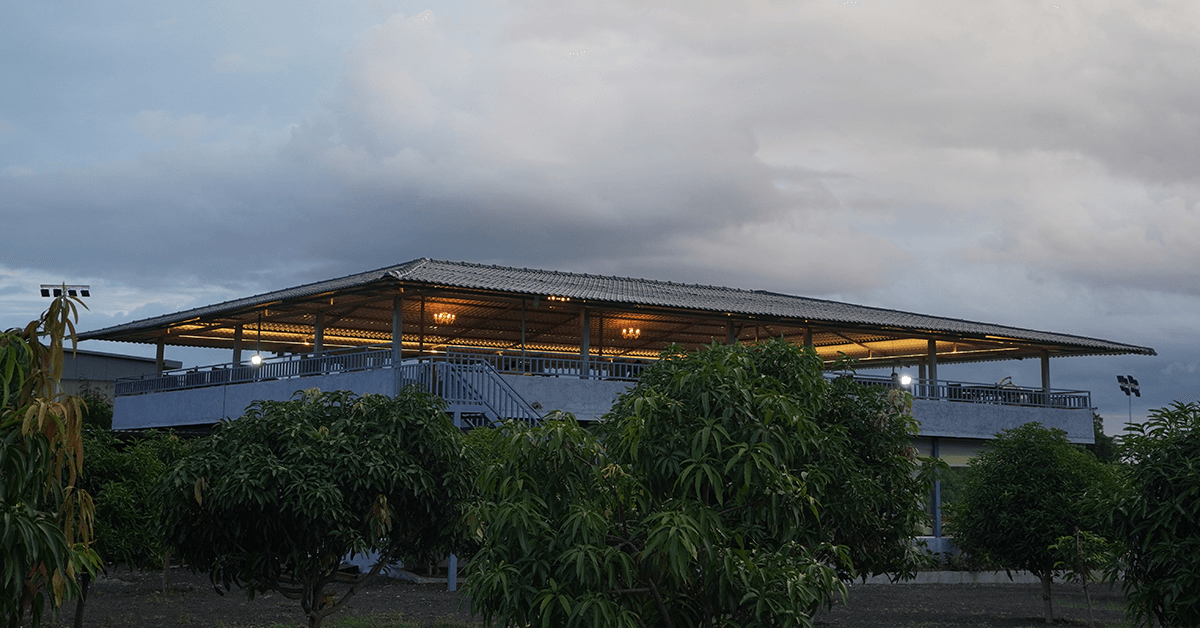
Resorts offer more generous, flexible space — a hall like Surabhi Convention for plenaries, plus outdoor lawns such as Utsav Garden for breakout sessions — letting organisers design a more dynamic agenda instead of cramming everything into one room.
Stronger Sense of Occasion
A retreat at a generic city hotel can feel like just another business trip — employees have stayed at similar hotels dozens of times before.
A resort changes that perception immediately. The change of scenery signals real investment in the team, which tends to lift engagement and morale for whatever the retreat's actual goal is.
Better Work-Life Balance for a Multi-Day Format
Most meaningful retreats run two to four days, not just an afternoon. City hotels don't offer much change of pace — same restaurant, same lobby bar, little to differentiate day one from day three.
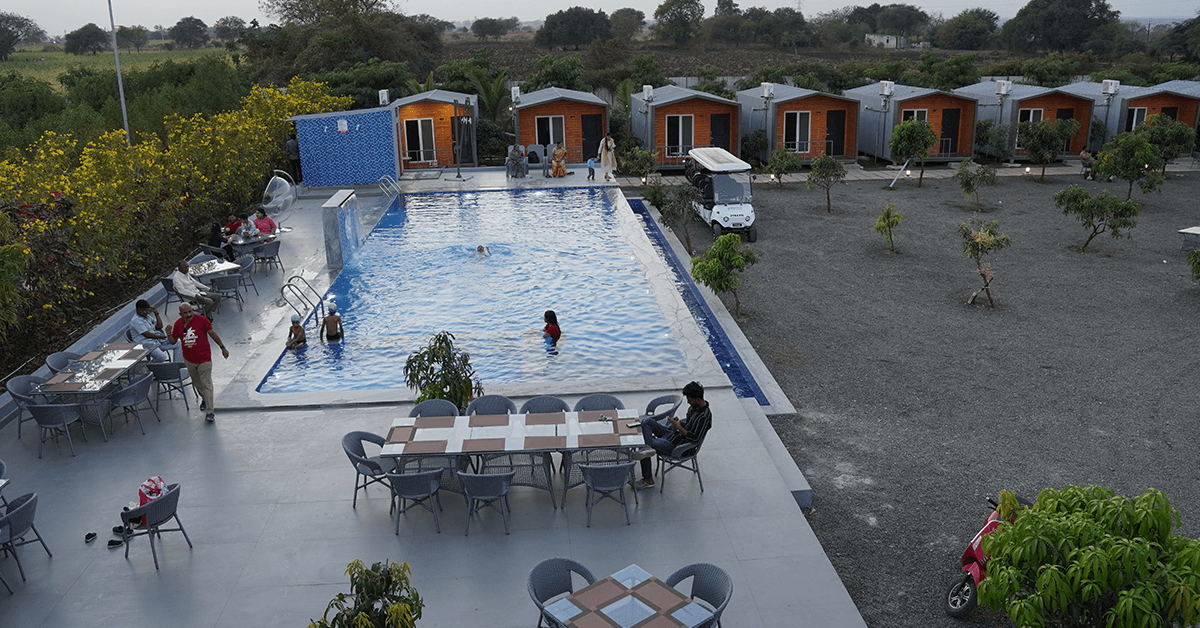
Resorts build in variety by design — evenings by the pool, dinner at a space like Fun Dine Restaurant , downtime at Mangrove Cottages — keeping energy higher across a multi-day event. Teams return recharged, not just relieved it's over.
Quick Comparison
| Factor | City Hotel | Resort Venue |
|---|---|---|
| Distraction-free environment | Limited — still within city routine | Strong — physical and mental separation |
| Built-in recreation | Rare, usually outsourced | Common — pools, sports, nature trails |
| Space flexibility | Fixed, often single conference room | Multiple indoor/outdoor spaces |
| Multi-day value | Costs add up across separate vendors | Often bundled into all-inclusive packages |
| Sense of occasion | Feels routine | Feels intentional and special |
| Team bonding opportunities | Limited to scheduled activities | Continuous, through shared spaces |
When a City Hotel Still Makes Sense
To be fair, city hotels aren't without their place. For short, single-day meetings where convenient access for external stakeholders or clients is the priority, a centrally located hotel can still be the practical choice. If the retreat is purely logistical — a board meeting, quarterly review, or training session with no bonding component — the extra travel time and cost of a resort may not be justified.
Everything Under One Property
Meeting space, recreation, dining, and stay — all on one site, so your agenda never has to leave the property.
A Resort Doesn't Just Relocate a Meeting — It Changes What the Meeting Achieves
Physical distance, built-in recreation, flexible spaces, and bundled value make resorts the smarter choice for any retreat meant to actually move the needle — strategically or culturally.
Plan Your Retreat View Stay Options
Book your royal stay at Bijaspur Royale Tree Resort